Grind Your Teeth at Night? What That Means for Porcelain Veneers
Introduction
Loads of people who grind their teeth at night have no idea they’re doing it. The telltale signs usually show up in the morning in the form of a stiff jaw, a dull ache in the temples or a partner saying they heard a noise whilst you were asleep.
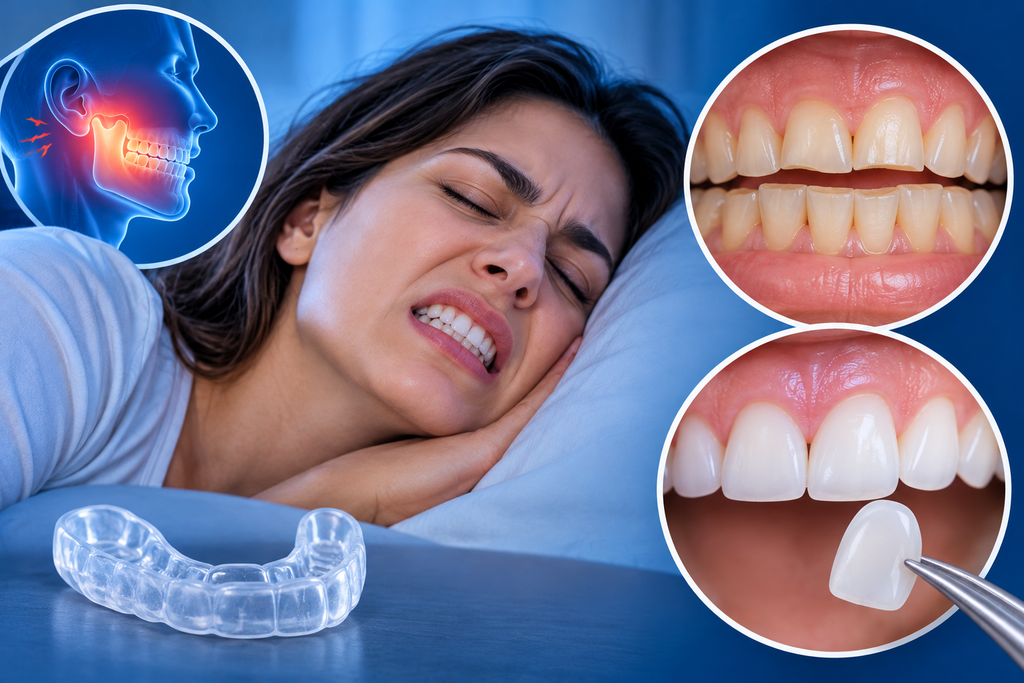
If you’re looking at porcelain veneers, then those bits of information are important. Grinding applies a massive amount of force to the very edges that the veneers are going to cover. That doesn’t necessarily exclude the use of veneers; it just means they need to be planned and protected in a very different way.
This article looks at what grinding is, why it’s of concern in the context of veneers, how dentists assess it and what habits help veneers deal with it.
Table of Contents
- What night grinding does to teeth
- Signs you might be grinding without knowing
- Why grinding is a problem with porcelain veneers
- Can you still have veneers if you grind?
- The night guard and why it matters
- Daytime habits that make a difference
- Conclusion
- Contact Us
What night grinding does to teeth
Grinding and clenching (known as bruxism in dental circles) occurs when the jaw muscles are working hard whilst you’re asleep or otherwise not paying attention. The pressure can be considerably greater than that of normal chewing and can go on for a lot longer. Over months and years, this can lead to the biting edges being flattened, small chips and cracks occurring, teeth becoming sensitive, and the jaw muscles becoming sore.
Causes vary from person to person. Stress plays a part for many people, and so do poor sleep, late caffeine, alcohol and some medications. In some cases, grinding is linked with breathing problems during sleep, so heavy snoring or waking up tired is worth mentioning to your doctor.
Signs you might be grinding without knowing
Because it often happens during sleep, grinding is easy to miss. Common signs include:
- Jaw stiffness or aching when you wake up
- Morning headaches around the temples
- Flat, shiny or chipped biting edges
- Sensitivity that has crept up for no clear reason
- Ridges on the inside of the cheeks or a scalloped edge on the tongue
- A partner hearing grinding or clicking at night
Even in the absence of any symptoms, a dentist can often pick up on the evidence of grinding from the wear pattern on the teeth. That’s one of the reasons why you’ll always have a full check prior to any veneer plan.
Why grinding is a problem with porcelain veneers.
Porcelain is strong and holds its colour extremely well. It’s good at withstanding the up-and-down pressure of chewing; the side-to-side grinding is a bit more of a problem though and can lead to chipping of the veneer edge, cracking and/or weakening of the bond to the tooth over time.
The edges take the majority of the load. The front teeth are the ones that guide the jaw as it moves forward and sideways, so the biting edges of the veneers are the ones that are going to be carrying the bulk of the load during nighttime grinding. A veneer that looks absolutely perfect in the mirror can still go wrong quite early on if the bite hasn’t been planned around those movements.
The rest of your mouth is affected as well. If you’re still grinding after the veneers have been fitted, then the teeth that don’t have veneers will continue to wear down, and the lower teeth, which are biting against the porcelain, will wear down quite quickly.
Can you still have veneers if you grind?
Often, yes, but with a more careful plan. A dentist will usually look at:
- How severe the grinding is and whether the wear is still active
- Your bite, including how the front teeth meet and guide the jaw
- Whether there is enough healthy enamel; the plan may well be different. The design could be altered so that the edges aren’t overloaded (e.g. by keeping the length quite conservative). The material may be different, as some ceramics are better suited to the higher biting forces. In some cases the dentist may simply recommend managing the grinding and protecting the teeth first and then look at veneers at a later stage. Crowns or bonding may be a more appropriate solution for some teeth. Where there’s heavy grinding, and it’s uncontrolled, and the patient is simply not willing to wear the protection, then the dentist may well advise against porcelain veneers entirely. That would be an honest piece of advice and would in fact save you a lot of repeat work. At Magnum Dental Clinic in Arjan, we do check for grinding as part of the assessment prior to any veneers so we can plan on the protection from the outset. Assessment before veneers, so protection can be planned from the start.
The night guard and why it matters
If you’re grinding and have porcelain veneers, then a custom night guard is normally part of the package. It’s a very thin, custom-fitted appliance which goes over the teeth when you’re asleep and is made from a scan or impression taken after the veneers have been fitted. The idea is that it takes the grinding forces off the porcelain.
Shop-bought boil-and-bite guards are available, but a custom guard will generally fit better and is far more comfortable to wear night after night. Comfort is the key thing as the guard is only of any use if you actually wear it.
A few tips to keep it in good shape:
- Rinse and brush the guard every morning and then just let it dry in the case.
- Take it to the check-ups so the fit can be assessed.
- Keep it away from heat of any kind, including a car parked in the Dubai sun, as it can warp.
- Replace it when it becomes worn, cracked or loose.
Daytime habits that make a difference
Grinding isn’t just a problem at night. A lot of people grind during the day as well, whilst working at their desk, sitting in traffic on Al Khail Road or just focusing on a screen. The aim is to get into a relaxed resting position (lips together, teeth very slightly apart, jaw completely loose).
Other habits to be mindful of with veneers are biting your nails, chewing pens, opening packets with your teeth and crunching ice. Reducing caffeine later in the day and having a more relaxed routine before bed may help some people with their grinding. If stress is a big factor,r then of course tackling that stress will help both your teeth and your sleep.
Conclusion
Grinding your teeth at night doesn’t necessarily rule out the prospect of veneers (in fact they can be a good option in many cases), but it does mean that they need to be carefully considered and protected. The dentist will assess the extent of the grinding, the way your teeth meet and whether the enamel is capable of supporting a strong bond. With a well-thought-out design, a custom night guard and management of any daytime clenching, many people who grind can still go ahead with veneers. If the grinding is quite severe, then managing that first is usually the more sensible thing to do.
Contact Us
If you grind your teeth and want to know whether porcelain veneers could work for you, you can visit our Arjan branch for an assessment.
Name: Magnum Dental Clinic – Arjan
Address: Building 88, Al Barsha South, Near Miracle Garden, Arjan, Dubai, United Arab Emirates
Phone: +971 55 890 8653