Wisdom Tooth Extraction for University Students: Planning Around Exams
Introduction
Wisdom teeth are just awful at the right time. They tend to start coming in between the ages of 17 and 25, which is precisely when most people are already deep into their lectures, assignments and exam periods. Having a throbbing jaw the night before an exam is not really the best way to prepare.
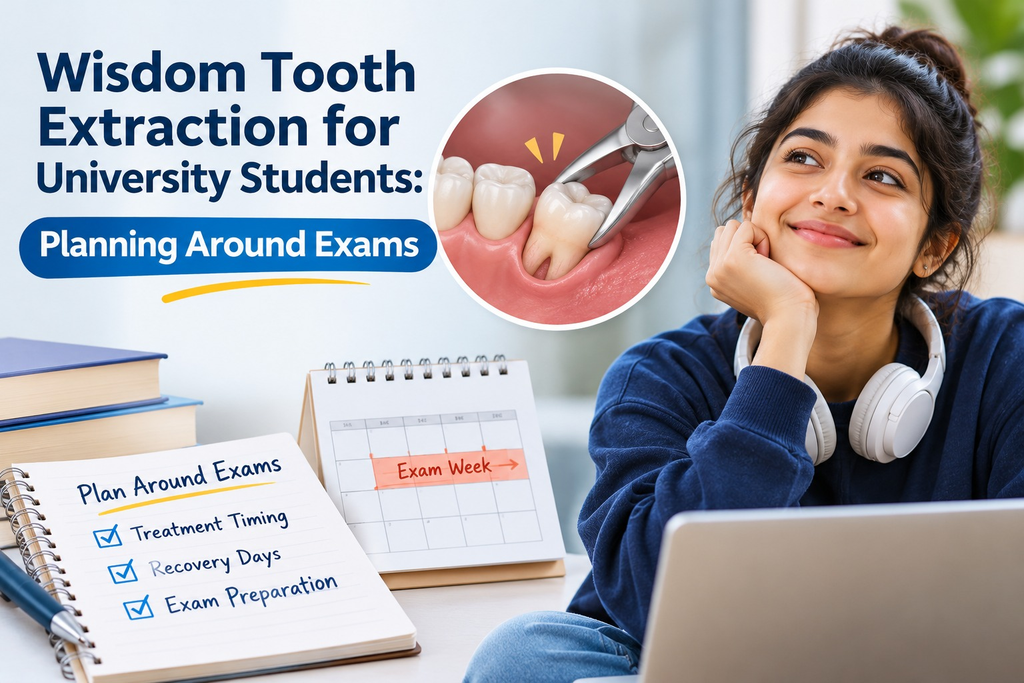
The good news is that wisdom tooth extraction is something you can plan. With a bit of foresight, you can get the troublesome wisdom teeth out during a relatively quiet period of the semester and thus not have them interfere with your exams, presentations and projects. This guide looks at how to time the procedure, what you need to do in advance and how you can study during your recovery period.
Table of Contents
- Why Students Often Face Wisdom Tooth Problems
- Signs You Should Book a Check-Up Before Exam Season
- Choosing the Right Time for Wisdom Tooth Extraction
- A Realistic Recovery Timeline for Your Study Plan
- Studying While You Heal
- Habits to Pause for a Few Days
- Practical Details Students Often Forget
- If Pain Starts Right Before an Exam
- Conclusion
- Contact Us
Why Students Often Face Wisdom Tooth Problems
Wisdom teeth are the last molars to erupt, and many jaws simply don’t have enough room for them. If a tooth is unable to erupt properly, it can remain partially buried in the gum or grow in at an angle, which can then lead to swelling, food getting trapped and infection around the tooth.
Student life adds a few more pressures on top of the normal ones. Irregular eating, staying up late, energy drinks, and not going to the dentist at all make it far harder to keep the back of the mouth healthy. For a lot of students, wisdom teeth removal is recommended at this age as the roots are often still coming in, which generally makes the surgery easier and the recovery quicker than it would be if you waited until years later.
Signs You Should Book a Check-Up Before Exam Season
See a dentist sooner rather than later if you notice:
- Pain or pressure at the back of the jaw
- Swollen or tender gum behind your last molar
- A bad taste or bad breath that keeps returning
- Bleeding from the back gum when you brush
- Difficulty opening your mouth fully
- Headaches or ear discomfort on one side along with jaw pain
A check-up and X-ray early in the semester gives you the opportunity to make a considered decision rather than being forced to react to a flare-up in revision week.
Choosing the Right Time for Wisdom Tooth Extraction
The ideal slot is at the very beginning of a break. Semester breaks, reading weeks or the days straight after your final exam all work well as they give you several days with no deadlines at all. Morning appointments also work as they leave the rest of the day free.
A few practical pointers:
- Leave at least a week between wisdom tooth extraction and any exam or major submission.
- Don’t book just before you’re travelling home or on a trip abroad.
- Arrange a follow-up prior to the start of your next term.
- If you’re having all four of your wisdom teeth removed, ask whether it’s better for your break to do them all at once rather than splitting them up.
Students in Dubai will often have winter and summer breaks, which makes this kind of planning very feasible. The summer heat does, of course, mean that you have to be well hydrated during your recovery period, though.
A Realistic Recovery Timeline for Your Study Plan
Everyone heals at a slightly different pace, but a typical pattern looks like this:
- Day one: the numbness will wear off over a few hours. Just rest, use cold packs and stick to soft, cool foods.
- Days 2 and 3: swelling is usually at its peak. Light reading is probably OK; long study sessions will be rather tiring.
- Rest of week one: discomfort eases steadily, and most of the students are ready to go back to classes.
- Week 2: normal eating back again (stitches generally either dissolved or removed by this stage).
Plan your first real study day for around day 4 or 5 and keep it flexible. The wisdom teeth removal (involving surgery on a very deeply impacted tooth) can take a bit longer, so ask your dentist what you can expect in your particular case.
Studying While You Heal
Recovery days don’t have to be wasted. The first few days can be spent on lighter tasks such as going through your notes, watching the recorded lectures and sorting out your revision timetable.
A few things make studying easier:
- Keep your head slightly raised with an extra pillow whether you’re studying in bed or actually sleeping.
- Prepare soft foods in advance such as yoghurt, soup, scrambled eggs and smoothies (eaten with a spoon).
- Set reminders for your medication so that your pain relief is as consistent as possible.
- Ask your dentist whether any of the painkillers you’re prescribed might cause drowsiness before you go in to plan some heavy study sessions.
Short study blocks with regular breaks are generally better than long sessions when you’re healing. Don’t forget to keep well hydrated, as good fluid intake will aid the healing process and help with concentration.
Habits to Pause for a Few Days
Some everyday student habits can slow healing. For at least the first few days, avoid:
- Smoking, shisha and vaping
- Drinking through straws
- Very hot drinks, including late-night coffee
- Energy drinks and alcohol, especially alongside prescribed medicines
- Crunchy snacks like chips and nuts
Suction and smoke can actually dislodge the blood clot which protects the socket, and that can lead to a painful condition known as ‘dry socket’.
Practical Details Students Often Forget
Small admin tasks can cause big stress if they are left to the last minute:
- Check whether your health insurance or university plan will cover the extraction of your wisdom teeth and what prior approval it may require.
- If you need to miss classes or require an extension, then ask the clinic for a medical certificate.
- Arrange for a friend or relative to go with you, particularly if you’re going to be sedated.
- Keep your dentist’s number saved in case you do have any queries at all after the procedure.
If Pain Starts Right Before an Exam
Occasionally a wisdom tooth will come in at the most inopportune moment. If that’s the case, get in touch with your dentist rather than just going on painkillers. In many instances, the dentist will be able to clean the area, prescribe medication if necessary and sort out the infection so that the extraction can be scheduled in after your exams rather than having to go under at that moment.
Get same-day care if the swelling spreads to your face or neck, you develop a fever, or you have difficulty swallowing.
Conclusion
Wisdom teeth problems are notoriously common in the peak years of student life, and they don’t have to be the death of your studies. An early check-up, a well-timed appointment and a straightforward recovery plan make the extraction of a wisdom tooth far easier to fit in around your course load. Treat it as part of your semester plan rather than an emergency, and you’ll be much better off in terms of both your health and your grades.
If you’re a student living or studying near JVC, our dental team can have a look at your wisdom teeth and help you find a time that works around your exams.
Contact Us
Magnum Dental Clinic, JVC
Arcadia Tower, Shop 2, Beside CART Supermarket, Jumeirah Village Circle, Dubai, United Arab Emirates
Phone: +971 50 719 3374