Veneers for Teeth to Fix Gaps, Chips and Uneven Edges: When They Fit and When They Don’t
Introduction
A small gap between the front teeth. A corner that chipped on a fork years ago. Edges that look slightly jagged in every photo. Those are some of the most common reasons people will start asking about veneers.
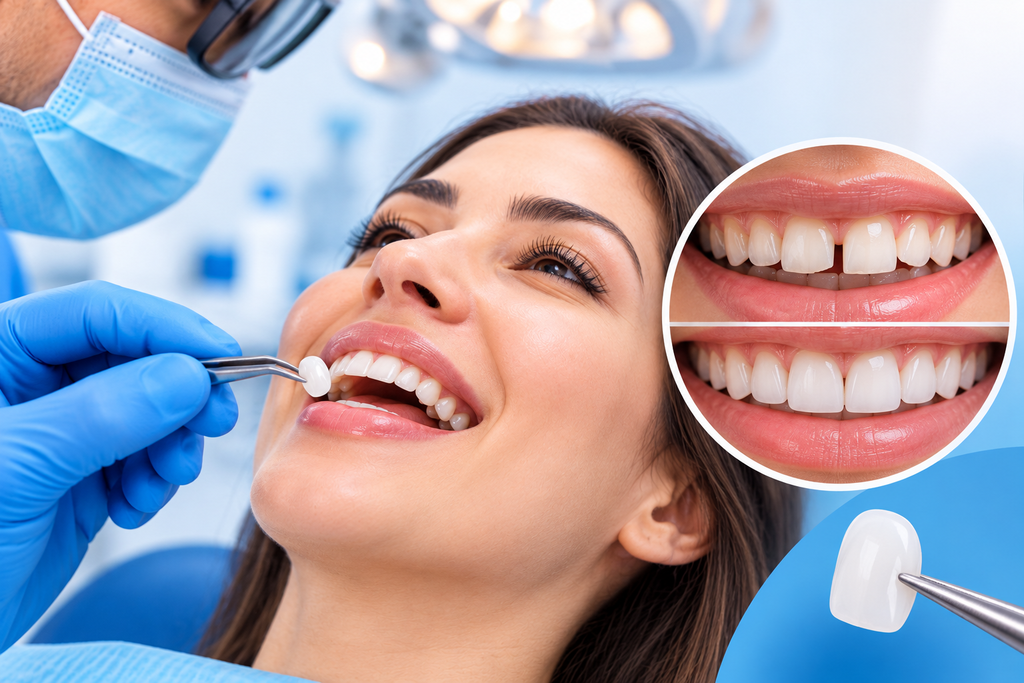
Veneers are essentially thin shells (porcelain or composite) which are bonded to the front of a tooth to alter its shape, length and/or colour. If used for the right indication, they can be a very effective way of making a smile look more even. If used for the wrong indication, they can create problems that are much harder to deal with later on.
This piece looks at which gaps, chips and uneven edges veneers are generally best suited for, which ones are better dealt with in a different way and what a dentist will be looking at prior to making a recommendation.
Table of Contents
- What veneers can and cannot change
- Gaps between teeth
- Chipped teeth: size and cause matter
- Uneven or worn edges
- When another treatment may fit better
- How a dentist decides
- Conclusion
- Contact Us
What veneers can and cannot change
Veneers go on the front of the tooth and can alter the appearance of the tooth in a number of ways (outline, length, colour and, to a degree, the straightness of the tooth). They cannot move teeth, they cannot correct the bite, and they can’t treat anything that’s going on inside the tooth. A veneer is only as good as the tooth it’s bonded to.
The first question is always the cause. If it’s primarily an aesthetic issue and the teeth themselves are in good health, then veneers are definitely worth considering. If the problem is to do with tooth position, the bite or disease, then that would need to be addressed first.
Gaps between teeth
A small gap between the two upper front teeth (a diastema) is one of the classic reasons people look at veneers. The gap can be closed or reduced by making each tooth very slightly wider.
Size changes the picture. With a narrow gap, the amount of added width is minimal, and the teeth still end up in proportion. A wide gap is a different proposition. Stretching two teeth to fill it can leave them looking quite broad and square, which may in fact be less natural than the gap. In that scenario, a dentist may well suggest closing part of the gap with clear aligners or braces first and then using the veneers for shape and shade if you still want them.
The reason for the gap is important too. Some gaps have been there since you were a child. Others appear in adulthood as a result of gum disease, which has undermined the support around the teeth and so they can actually drift. A new and widening gap is a reason to have your gums checked prior to any cosmetic work, as you’d be concealing the symptom rather than treating the cause.
Chipped teeth: size and cause matter
Small chips on the edges of the front teeth are extremely common, and the fix is usually very straightforward. A minor chip can often be dealt with entirely by the use of tooth coloured composite bonding in a single visit, no veneer required at all. Veneers are only really considered when the chip is quite noticeable, when it’s a number of teeth, or when you’re also wanting to change the shape and/or colour.
Larger breaks are a different issue altogether. If a significant portion of the tooth is missing, then there may not be sufficient healthy tooth for a veneer to bond to, and a crown (which would cover the whole tooth) would be the better option.
As to why the tooth chipped, one bite on an olive stone is just an accident. Repeated chipping is indicative of grinding, clenching or front teeth meeting edge to edge. Porcelain veneers can chip just as easily if you’ve not dealt with that pattern, so your dentist will look at how your teeth meet prior to doing anything.
Uneven or worn edges
Uneven edges manifest in a number of ways: one tooth a little shorter than its neighbour, edges that have been worn down to a flat surface or small notches which catch the light in the photos. Veneer teeth can be used to restore the edges and create a much smoother, more even line, in some cases even adding a little length where the teeth have been worn down.
Worn edges need a bit of a closer inspection, really. Wear has a cause; it’s usually down to grinding, acidic foods and drinks or a bite that’s too much for the front teeth. The regular consumption of fizzy drinks, citrus and sour sweets over a long Dubai summer can contribute to acid wear. Once you’ve worked out the cause, you can then go on to get the new edges to last.
When another treatment may fit better
Veneers are not the answer to every concern. These situations often call for a different first step:
- Crooked or crowded teeth, which aligners or braces can straighten without removing enamel
- Active decay or gum disease, which must be treated before cosmetic work
- Heavily filled or badly broken teeth, where a crown may offer more support
- Discolouration on well-shaped teeth, which may respond to professional whitening
- Very small chips, which bonding can often repair
- Severe grinding that has not been managed
Sometimes it’s a combination (e.g. first a straightening and then veneers on a few teeth to finish the shape). That takes longer, but can mean that less of your natural tooth has to be recontoured.
How a dentist decides
A proper assessment will normally involve an examination of your teeth and gums, X-rays if required and a check of your bite for signs of grinding. Digital scans and photographs will be used to plan the result, and you’ll normally be able to see a trial smile (made from temporary material placed over your own teeth) to give you a preview of the shape before any actual work is done.
Expect a discussion about what bothers you most. Two people with the exact same gap can have very different aspirations as to what they want. One person may want it completely closed, the other just wants it a bit smaller so that the smile still looks like their own.
You should also be aware of the trade-offs. Porcelain veneers often require a thin layer of enamel to be removed (which can’t be put back), and they will eventually need renewing. Composite veneers generally require less preparation but are more prone to staining and chipping.
At Magnum Dental Clinic in Dubai Silicon Oasis, our dentists will do that assessment and go through the options with you prior to any treatment being planned.
Conclusion
Veneers can be used for small gaps, minor chips and for uneven or worn edges on otherwise sound teeth. They are not ideal in the case of a tooth that is out of position, a large break, gum disease or untreated grinding. Veneers are likely to give the most natural-looking result when you have a clear understanding of the cause of the problem and the design is in fact tailored to your face and your bite. An accurate assessment is the first and most important step.
Contact Us
If you would like to know whether veneers suit your gap, chip or uneven edges, you can book a consultation at our Dubai Silicon Oasis branch.
Name: Magnum Dental Clinic – DSO
Address: SIT Tower 101, Nr Choitram Super Market, above Baskin Robins Ice-cream, Dubai Silicon Oasis, Dubai, United Arab Emirates
Phone: +971 54 336 3340