How Dubai’s Heat and Hard Water Shorten the Life of Home Appliances
A washing machine that lasts ten years in a cool climate does not always last as long in Dubai. Air conditioners, refrigerators, and dishwashers face a tougher environment here than in most cities: summer temperatures above 40°C, high humidity, mineral-rich tap water, and heavy daily use. None of these causes a sudden breakdown on its own. Together they speed up ordinary wear, and small faults appear sooner than owners expect.
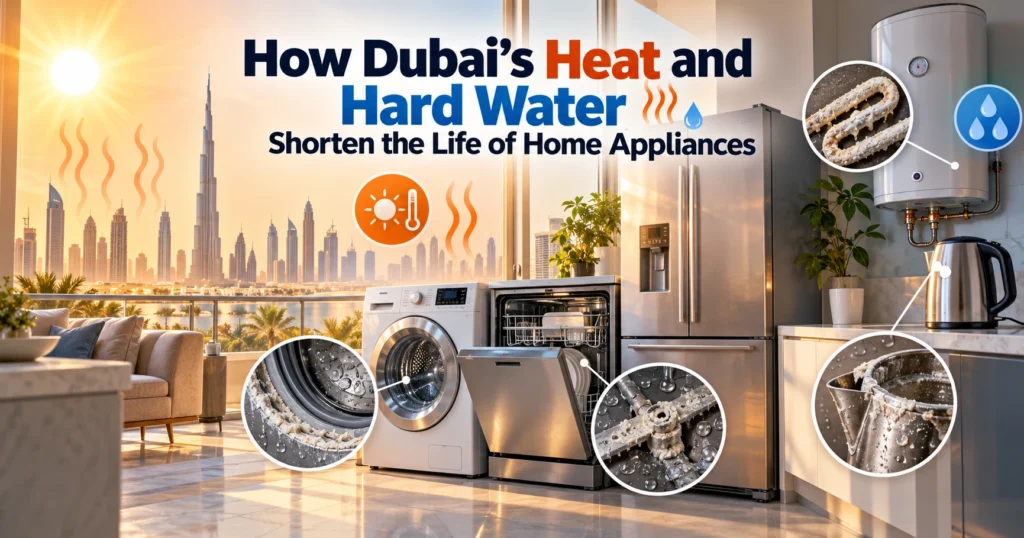
This article explains how each factor affects the main household appliances, which warning signs to watch for, and which habits help appliances last longer.
How Extreme Heat Affects Appliances
Every appliance that moves heat, whether it is cooling a room or keeping food cold, works harder when the surrounding air is hot. In Dubai that extra load is present for months each year.
Air Conditioners
AC units often run for most of the day through summer. Their compressors, fan motors, and capacitors stay under constant stress, and coils clogged with dust make them work harder still. Performance usually drops gradually, with weaker cooling and longer run times, before a component fails outright.
Refrigerators and Freezers
A refrigerator must reject heat into the room around it. When the kitchen is warm, the compressor runs longer to hold the same temperature. Door seals also wear faster in hot, humid conditions, which lets warm air in and adds to the load.
Ovens, Cooking Ranges, and Dryers
Heat inside the appliance combines with heat in the room. Thermostats, heating elements, and door seals age faster, and appliances installed in poorly ventilated spaces, such as tight cabinets or small utility rooms, struggle to shed heat.
How Humidity Affects Appliances
Humidity brings moisture into places where electronics and metal parts prefer to stay dry. Over time it can:
- Corrode metal contacts and connectors, which causes intermittent faults.
- Encourage mold and odors in washing machine drums, dishwasher filters, and refrigerator seals.
- Cause condensation on cold parts, which leads to frost buildup in freezers and water pooling where it should not.
Appliances that are used in short bursts and then left closed, such as washing machines and dishwashers, are especially prone to damp, musty interiors.
How Hard Water Affects Appliances
Tap water in Dubai contains dissolved minerals, and when water is heated or evaporates, those minerals stay behind as limescale. Over months and years, scale builds up in the parts that handle water.
- Washing machines: scale coats heating elements, which then need more energy to heat the water and burn out sooner. It also clogs pumps and valves.
- Dishwashers: scale blocks spray arm nozzles, clouds glassware, and reduces cleaning performance.
- Kettles, coffee machines, and water dispensers: scale shortens their working life and affects taste.
- Ice makers: mineral deposits can restrict water flow and affect ice quality.
A layer of scale on a heating element makes it harder to heat the water, so the problem often shows up first as a higher electricity bill. The U.S. Geological Survey explains that when hard water is heated, solid calcium carbonate deposits can form, and that this scale can shorten equipment life, raise heating costs, and clog pipes. Its overview of water hardness covers how hardness works and why it matters for household equipment.
How Power Fluctuations Affect Appliances
Voltage dips, surges, and sudden outages put stress on electronic parts. Modern appliances contain control boards, sensors, and inverter components that are sensitive to unstable supply. A surge can damage a board immediately, while repeated small fluctuations can shorten its life without an obvious single event.
Plugging sensitive appliances into surge-protected sockets, and avoiding overloaded extension leads, reduces this risk.
Warning Signs That Climate Wear Is Catching Up
Watch for these signals, which often appear before a complete failure:
- Longer run times or weaker cooling in ACs and refrigerators
- Frost buildup, or water pooling around cold appliances
- Visible limescale on heating elements, taps, and spray arms
- Unusual noises, vibration, or burning smells
- Higher energy bills with no change in usage
- Error codes or breakers that trip repeatedly
Catching these early usually means a smaller, cheaper repair.
Habits That Help Appliances Last Longer
- Clean AC filters monthly in summer, and have the system serviced at least once a year.
- Give appliances space to breathe. Leave a gap around refrigerators and keep vents clear.
- Descale regularly. Run a descaling cycle in washing machines, dishwashers, and kettles, using a product suited to the appliance.
- Check door seals on refrigerators, freezers, and ovens for cracks or gaps.
- Leave doors and lids ajar on washing machines and dishwashers between uses, so the interior can dry.
- Avoid overloading machines, which strains motors and bearings.
- Use surge protection for appliances with electronic controls.
- Follow the manufacturer’s maintenance schedule and keep the manual to hand.
When to Call a Professional
Some jobs are safe to do at home, such as cleaning filters, wiping seals, and running descaling cycles. Faults involving compressors, electrical components, gas supply, or control boards need a trained technician. Opening these appliances without the right tools risks injury and can turn a small repair into a major one.
For repairs, look for a provider with trained technicians, genuine parts, transparent quotes, and a clear warranty. Local companies such as CoreHome ApplianceFix offer these services for a wide range of household appliances across Dubai.
Conclusion
Dubai’s climate does not make appliances fail overnight, but it does remove the margin for neglect. Heat raises the workload, humidity invites corrosion and mold, hard water leaves scale, and unstable power strains electronics. The good news is that most of these effects are manageable. Regular cleaning, descaling, ventilation, and prompt attention to early warning signs can add years to an appliance’s working life.
FAQs
Why do appliances seem to wear out faster in Dubai?
Constant heat, high humidity, mineral-rich water, and heavy daily use increase the workload on compressors, motors, heating elements, and electronics, so normal wear builds up sooner.
How often should I descale my washing machine and dishwasher?
Every one to three months is a sensible routine in areas with mineral-rich water, adjusted to how often you use them and what the manufacturer recommends.
Does hard water really use more electricity?
Yes. Scale on a heating element insulates it, so the appliance needs more energy and more time to heat the water.
Should I use a surge protector for large appliances?
For appliances with electronic controls, a surge-protected socket is a reasonable precaution. Check the manufacturer’s guidance for large appliances such as ACs and refrigerators.
How often should an AC be serviced in Dubai?
At least once a year, with filters cleaned monthly during the hottest months.
Which appliance suffers most from the climate?
Air conditioners usually do, since they run longest at the hottest times, but refrigerators, washing machines, and dishwashers are all affected.